

While the financial media obsesses over the AU$52 billion hyperscale data centre boom, a different story is unfolding on the ground. From regional councils to suburban community halls, a quiet but fierce resistance is forming.
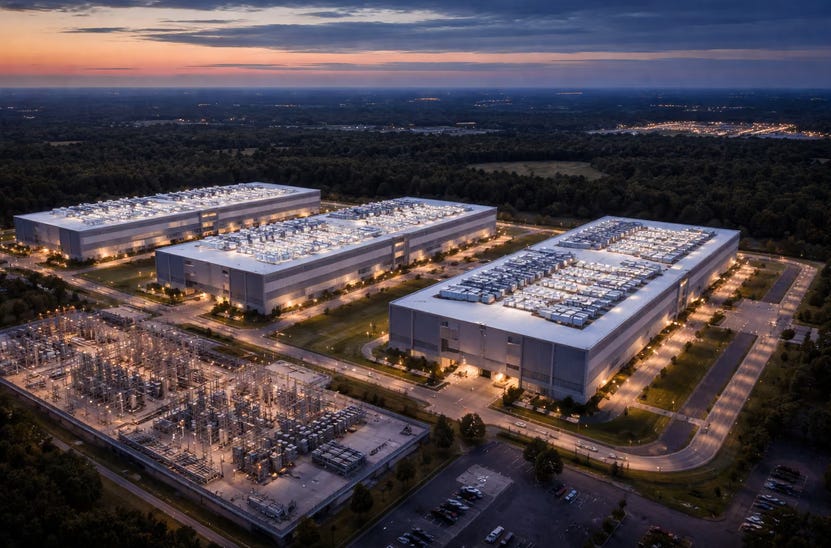
Source: ai tool discovery

This is not just standard “Not In My Backyard” [NIMBY] sentiment. This is a fundamental clash between global tech capital and local resource sovereignty.
Here is what lies beneath the tip of the iceberg regarding the growing public opposition to AI farms in Australia.
The Baseline: The Ground Swell of Public Opposition to AI Farms
What, When, Where, Why, and How.
The rapid proliferation of AI data centres — often referred to colloquially as “AI Farms” due to their massive physical footprint and resource consumption — has triggered a wave of community pushback across Australia.
Historically, data centres were viewed as quiet, low-impact neighbors, placed “unobtrusively” behind high concrete walls.
The AI revolution has changed that calculus entirely. The new generation of hyperscale facilities requires unprecedented amounts of land, water for cooling, and dedicated power grid connections.
We are seeing this opposition manifest in three distinct ways:
Peri-Urban Clashes: Communities on the fringes of Sydney and Melbourne are pushing back against the rezoning of agricultural and greenbelt land for massive concrete server campuses.
Council Resistance: Local governments, often ignored by state-level planning overrides, are beginning to draft stricter environmental and noise ordinances specifically targeting high-density compute facilities.
Resource Anxiety: Residents are increasingly questioning why local water tables and regional power grids are being leveraged to cool foreign-owned server racks while local infrastructure struggles!
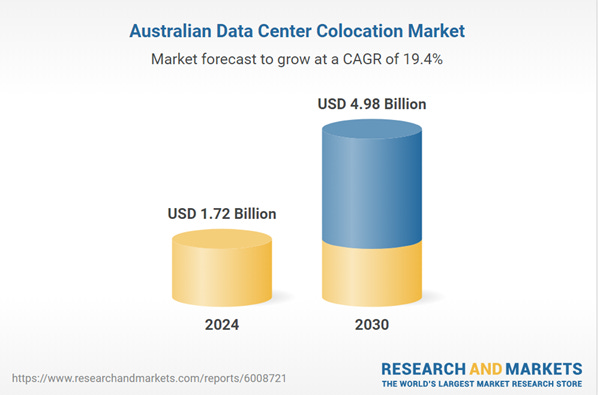
The Australia Data Center Colocation Market was valued at USD 1.72 billion in 2024, and is projected to reach USD 4.98 billion by 2030, rising at a Compound Annual Growth Rate [CAGR] of 19.39%.
The Impact: Resource Extraction in the Digital Age
So What?
To understand the AI infrastructure controversy, we must reframe how we view these facilities. They are no longer just “tech buildings.” They are heavy industrial resource extraction sites and must be classified as such.
The public opposition is not anti-technology; it is anti-extraction.
When a hyperscale AI farm draws millions of litres of water for evaporative cooling, or demands a dedicated substation that strains the local grid, it is effectively extracting physical resources from the host community to generate digital profits for offshore shareholders.
The “Digital Colonialism” Angle
Community friction arises because the benefits of these AI workloads — job creation and economic yield — are highly concentrated in the hands of a few tech giants, while the environmental and infrastructural costs are socialized across the local community.
When residents see their local power prices climb upwards, or their water security threatened, the “AI boom” stops looking like an economic miracle and starts looking like a liability.
This is the core driver of the public opposition to AI farms: a realisation that the physical cost of artificial intelligence is being paid for by the local environment.
The Future: What If the Revolt Stalls the Boom?
What if?
If this grassroots resistance is ignored, it will inevitably escalate into state and federal regulatory bottlenecks.
What if local councils successfully lobby for state-level moratoriums on data centre water usage?
What if environmental protections are expanded to classify massive server farms as “polluting industries” due to their thermal and electrical output?
The AU$52 billion investment pipeline relies on speed and a regulatory frictionless passage. If the public opposition forces a slowdown in planning approvals, the timeline for Australia’s AI infrastructure rollout will stall and perhaps fracture.
The tech giants may simply take their capital to jurisdictions with weaker community oversight, leaving Australia with the digital dependency but none of the infrastructure.
The Macro View
The local revolt against AI farms is the physical manifestation of a much larger economic shift. To understand the full scale of the capital reallocation driving this infrastructure boom — and how it directly correlates to the 9,200+ tech job-cuts we’ve seen this year — you must look at the macro data.
Read our complete, data-driven analysis here:
AI Workloads, Workforce Reduction & Hyperscale Data Centre Demand
Most platforms tell you what is happening.
We tell you why it matters and what happens next. If you found this analysis valuable, subscribe to get the next deep dive directly in your inbox.
P.S. Know someone in policy, tech, or resource management who needs to see this data? Forward this post or share the link.