

We look at 2 questions in this article;
Q1 : What went wrong when the UK handed its potential Oil & Gas Bonanza to multinational corporations — ending up with a Mountain of Debt?
Q2 : How did Norway avoid “handing over their Oil & Gas Bonanza” & then create one of the largest Sovereign Wealth Funds - a fund now worth over USD $2 Trillion.
This is the story about the greatest resource policy failure in modern history, and what Australia can learn from it.
Introduction: One Sea, Two Destinies
In the early 1970s, both Britain and Norway faced the same extraordinary opportunity. Both nations had vast oil and gas reserves beneath the North Sea.
Both nations had similar populations of workers, similar technological challenges, and similar geological resources.
But they made radically different choices.
Today, the results speak for themselves.
Norway built the world’s largest sovereign wealth fund, now worth over US $2 trillion ~~ equal to US $340,000-$385,000 per citizen.
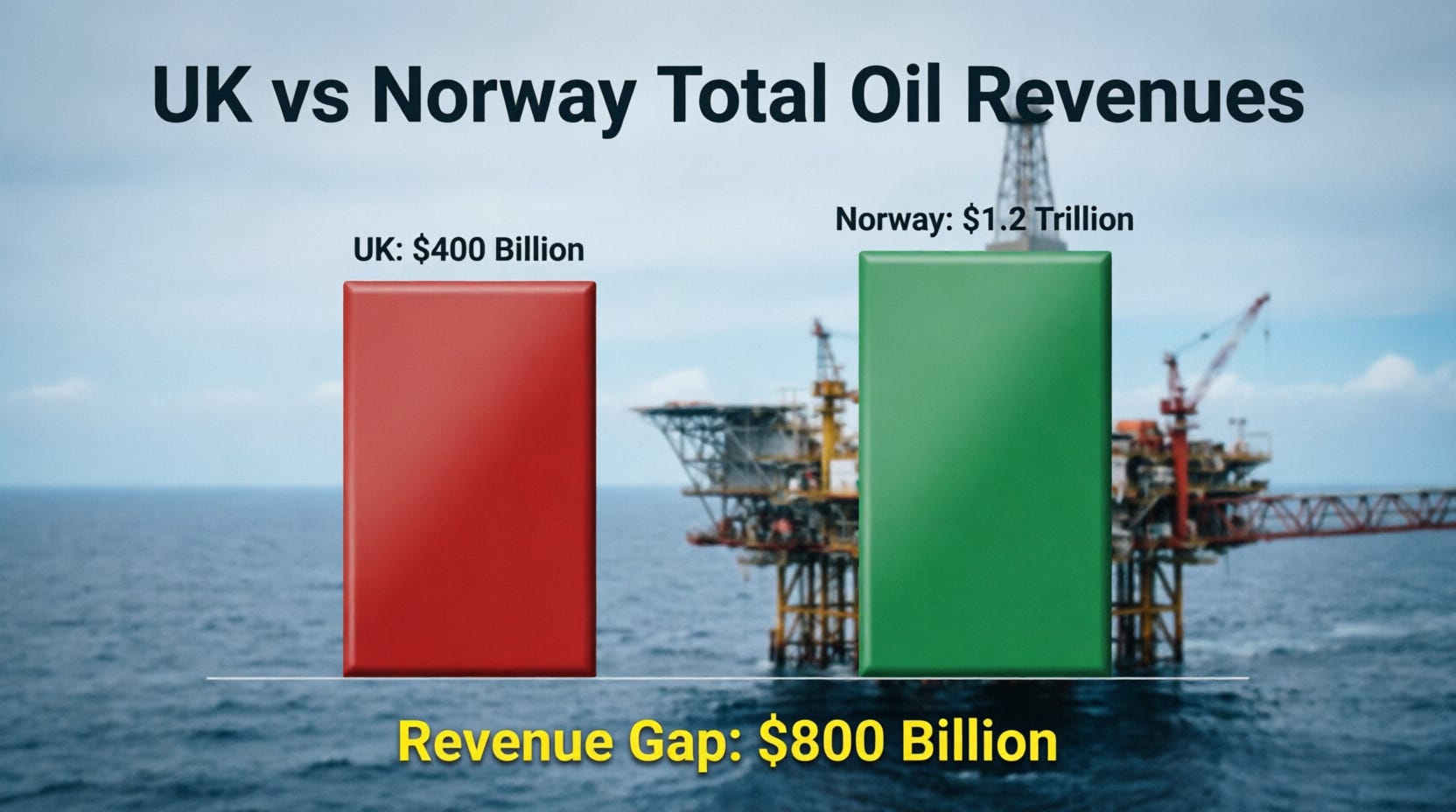
Britain collected just US $400 billion in total revenues while Norway collected US $1.2 trillion ~~ a gap of US $800 billion.
Source: economics help ~ why Norway Became Rich From Oil But The UK Lost Out
This isn’t just a story about oil & gas extraction.
It’s a story about resource sovereignty, intergenerational justice, and the difference between treating natural wealth as a temporary windfall versus a permanent national endowment.
For Australians watching debates about critical minerals, gas reserves, and lithium exports, this comparison holds urgent & critical lessons.
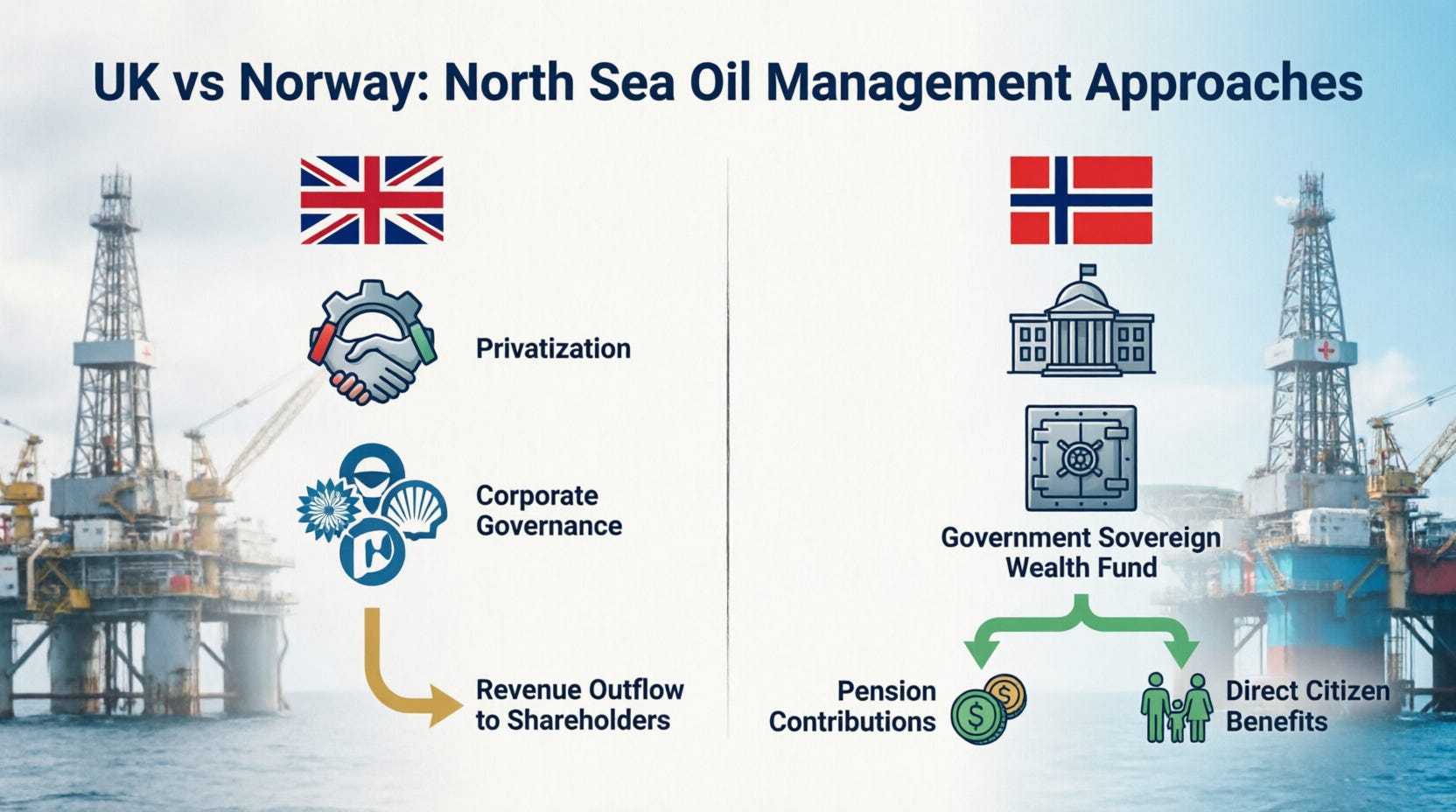
The British Approach - Privatization and Plunder!
The Thatcher Revolution
When North Sea oil began flowing in the mid-1970s, Britain initially maintained some state control. But everything changed with Margaret Thatcher’s election in 1979.
Between 1982 and 1987, the British government systematically privatized its North Sea oil and gas assets through the Oil and Gas [Enterprise] Act 1982
The government’s ownership share was sold off to private corporations, creating companies like Enterprise Oil and opening the door for international giants like Shell and BP to dominate production
British privatizations during the Thatcher government were the most important in the world by value, with those in the hydrocarbons sector alone representing unprecedented transfers of public wealth to private hands.
The Results ~ A Revenue Collapse
These numbers tell a devastating story:
Total UK tax revenues from North Sea oil [1975-2025] ~~ Just $400 billion
Peak revenue year: £9.9 billion in 2022/23 [briefly, before falling again].
Effective tax rate: Just $11.0 per barrel [in 2014 prices].
Adding insult to injury, the UK government provided over £13 billion in subsidies to the oil and gas industry between 2016 and 2020, effectively paying companies to extract resources
Where Did the Money Go?
Unlike Norway, Britain had no sovereign wealth fund, no long-term savings mechanism, and no intergenerational strategy.
Oil revenues were treated as general government income, used to fund current spending and tax cuts rather than building lasting wealth
The profits flowed to private shareholders ~ many of them foreign corporations ~ rather than British citizens.
As one analysis put it ~~ «The UK North Sea basin was plundered!»
Plundered Nations: How Global Corporations Strip Sovereign Resource Revenue

This is a continuation from PART 2 featuring comparisons between George Orwell’s Animal Farm and greedy multinational corporations.
Australian Oil & Gas Resources - Plundered - the same as the UK.
Norway’s Approach - State Ownership & Sovereign Wealth
The Birth of Equinor - Then Statoil
In September 1972, one year after Norway discovered, the Norwegian parliament made a fateful decision: they created Den Norske Stats Oljeselskap AS ~ later known as Statoil, now Equinor ~~ as a 100% state-owned oil company.
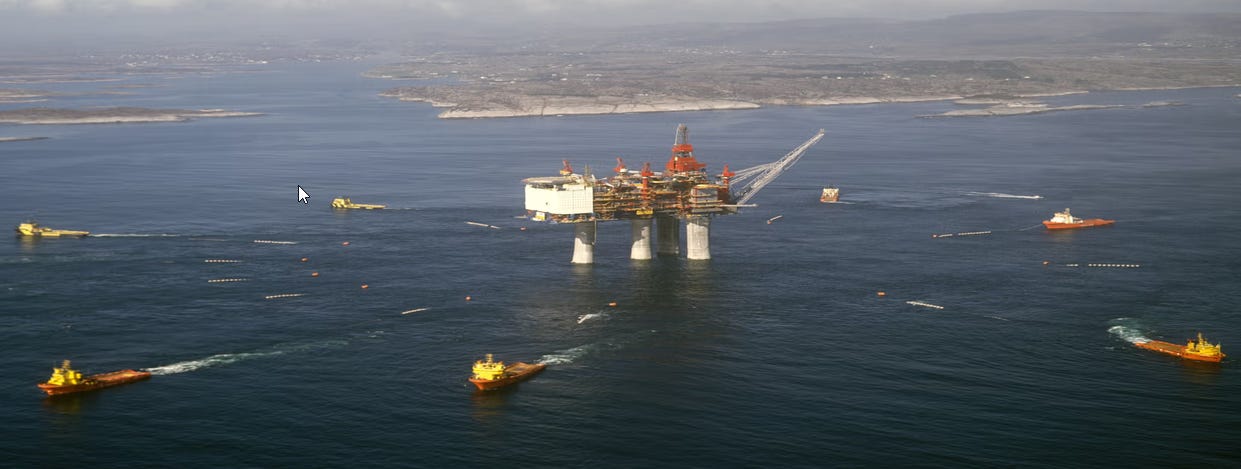
Source: Towing the Gullfaks C platform to the field in 1984 ~ Photo: Leif Berge
The mission was explicit;
« to help Norway do more than just collect revenues from the ownership of a resource.»
Statoil would be the government’s commercial instrument in developing the petroleum industry, ensuring Norway built technical expertise and maintained control over its resources.
The 50% Rule
Norway established a principle of 50% state participation in every production license.
The government didn’t just tax oil profits ~ it owned half the resource itself.
Today, the Norwegian state still holds a 67% ownership stake in Equinor, maintaining strategic control while the company operates commercially.
The Sovereign Wealth Fund: Building Permanent Wealth
In 1990, Norway took its most visionary step: creating the Government Pension Fund Global [GPFG] ~ now the world’s largest sovereign wealth fund.
Consider - how did a nation of just 4.2 million citizens manage to build the World’s Biggest Sovereign Wealth Fund - this is a Critical Question!
The results are staggering:
Effective tax rate: $29.8 per barrel (in 2014 prices) ~ nearly 3x higher than the UK.
But Wait - There is More!
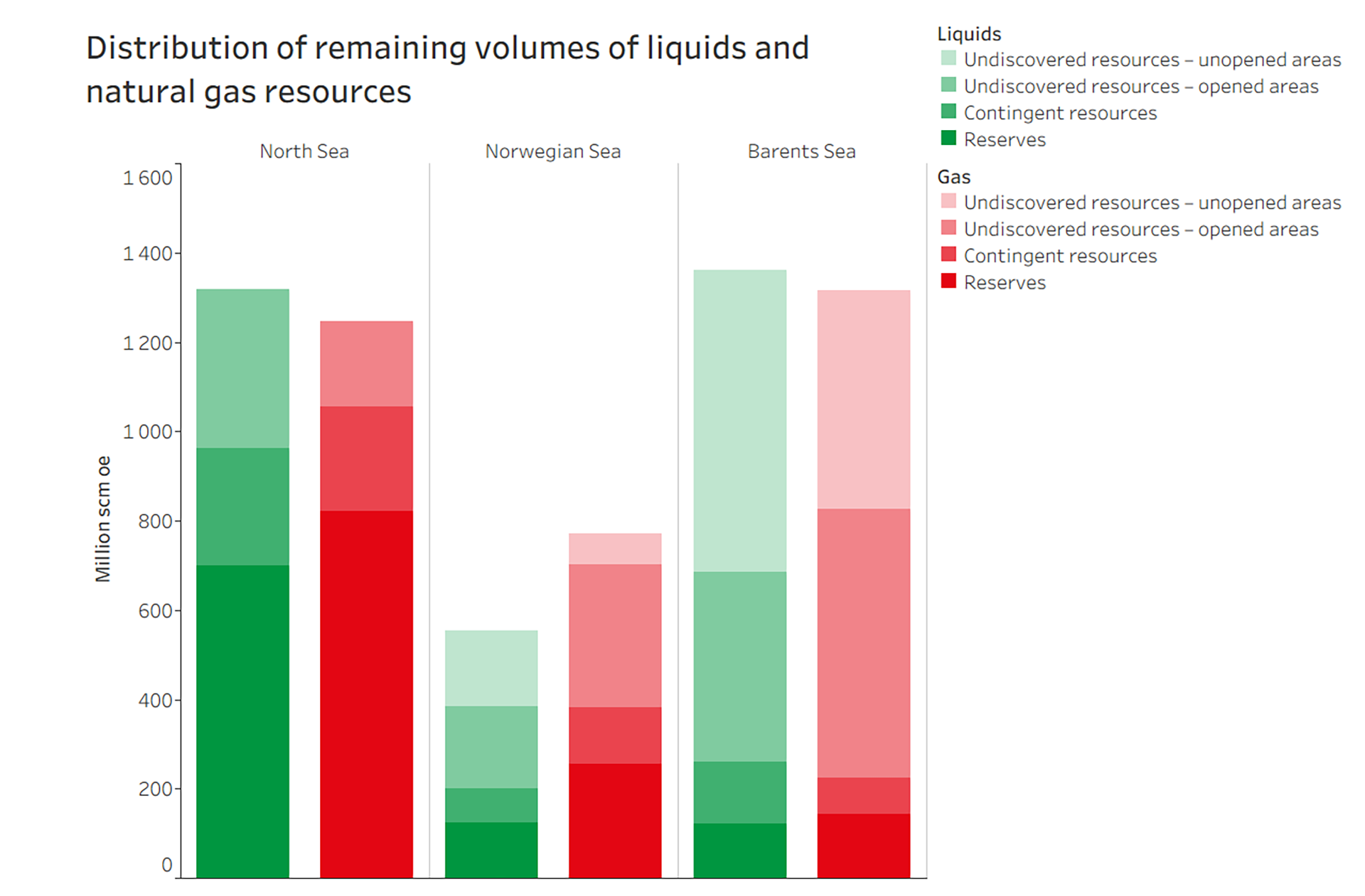
The Norwegian Story is not finished yet ~ as the map graphic below confirms;
There are still significant untapped Resources & Reserves!
Conclusion: The Choice We Still Face
The tale of two nations in the North Sea reveals an uncomfortable truth: Britain’s £800 billion mistake was not inevitable. It was a choice.
When Margaret Thatcher’s government chose privatization over state ownership, it wasn’t following economic necessity—it was following ideology. The same ideology that now dominates our central banks: that private profit should trump public good, that markets know best, and that governments should be “small” while unelected central bankers wield unlimited power.
But Norway chose differently. Not because they were smarter, but because they were willing to see natural resources as a public trust, not a private windfall.
This connects directly to the patterns we’re exposing in our investigative series, “How Central Banks Really Operate.” Just as the UK allowed private shareholders to capture oil wealth while households struggle, the Reserve Bank of Australia and other central banks now crush households with rate hikes while governments splurge trillions with no accountability.
The common thread?
A financial system designed to socialize losses and privatize gains.
Lee Kuan Yew warned Australia about the “resource curse”— the complacency that comes from easy wealth.
But the curse isn’t the resources themselves.
It’s the financial architecture that allows elites to capture that wealth while citizens bear the costs.
As we’ve shown in Part 1: The Great Deception, central banks claim independence while enabling government overspending.
In Part 2: The Money Creation Secret, we exposed how private banks create 97% of our money supply out of thin air. The Norway model proves that when credit creation and resource wealth are managed for public benefit, entire societies prosper.
The question isn’t whether we can afford to change the system.
It’s whether we can afford not to.
Norway’s sovereign wealth fund didn’t happen by accident. It required political courage to resist the siren song of short-term privatization gains. It required recognizing that natural resources belong to the people, not to shareholders or politicians.
Britain’s £800 billion mistake is a warning. Australia’s resource curse is a choice. And the central banking system that enables it all? That’s the next chapter in our investigation.
Coming next in our series: How the Bank of Japan engineered the 1980s bubble and deliberately crashed it to force “structural reform”— a playbook now being repeated worldwide.