

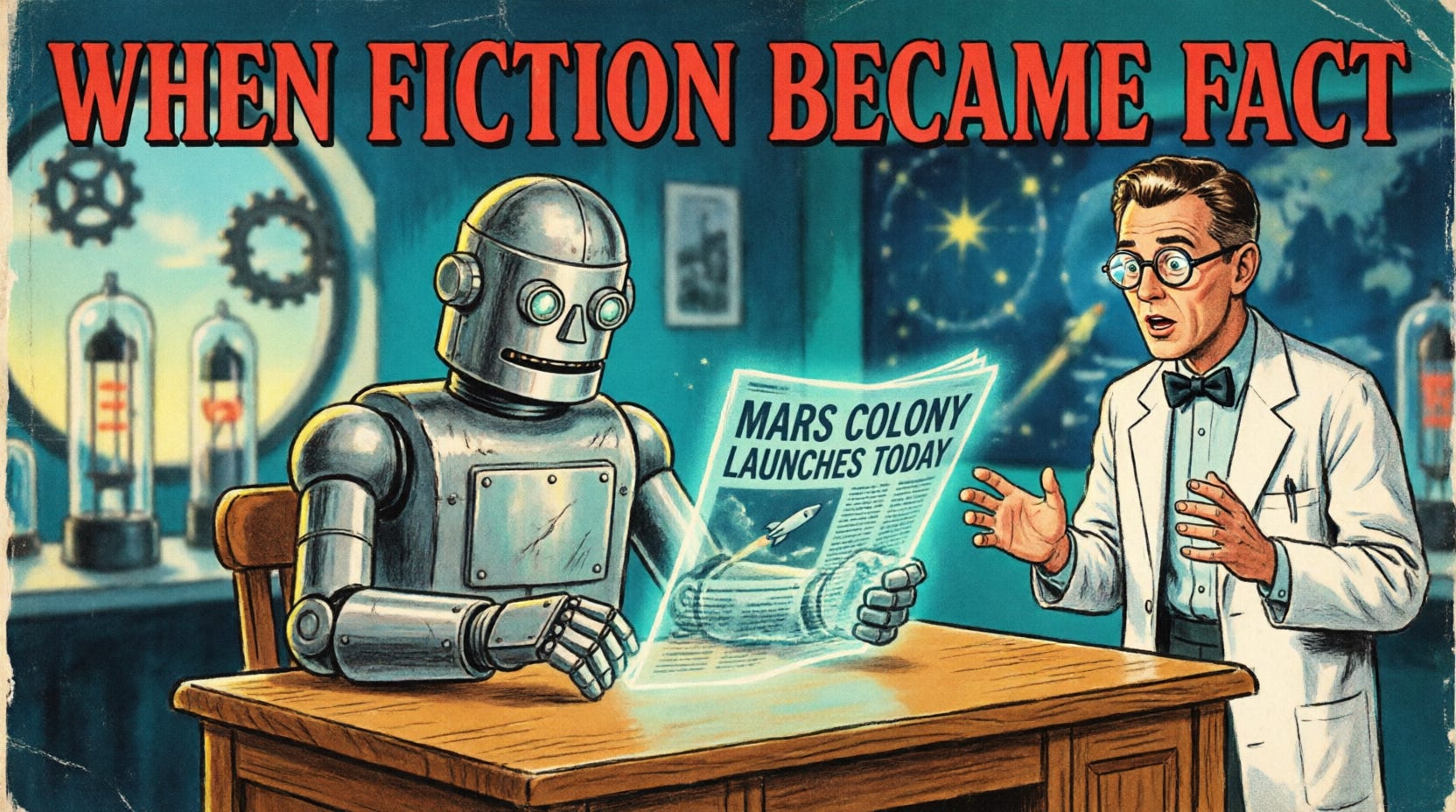
In this report, we take a Retrospective look — how early science-fiction publications, films and comics described today’s AI reality before the first transistor existed — and how their warnings about machines, labour and dependence read more importantly than ever.
The Prophets in Print
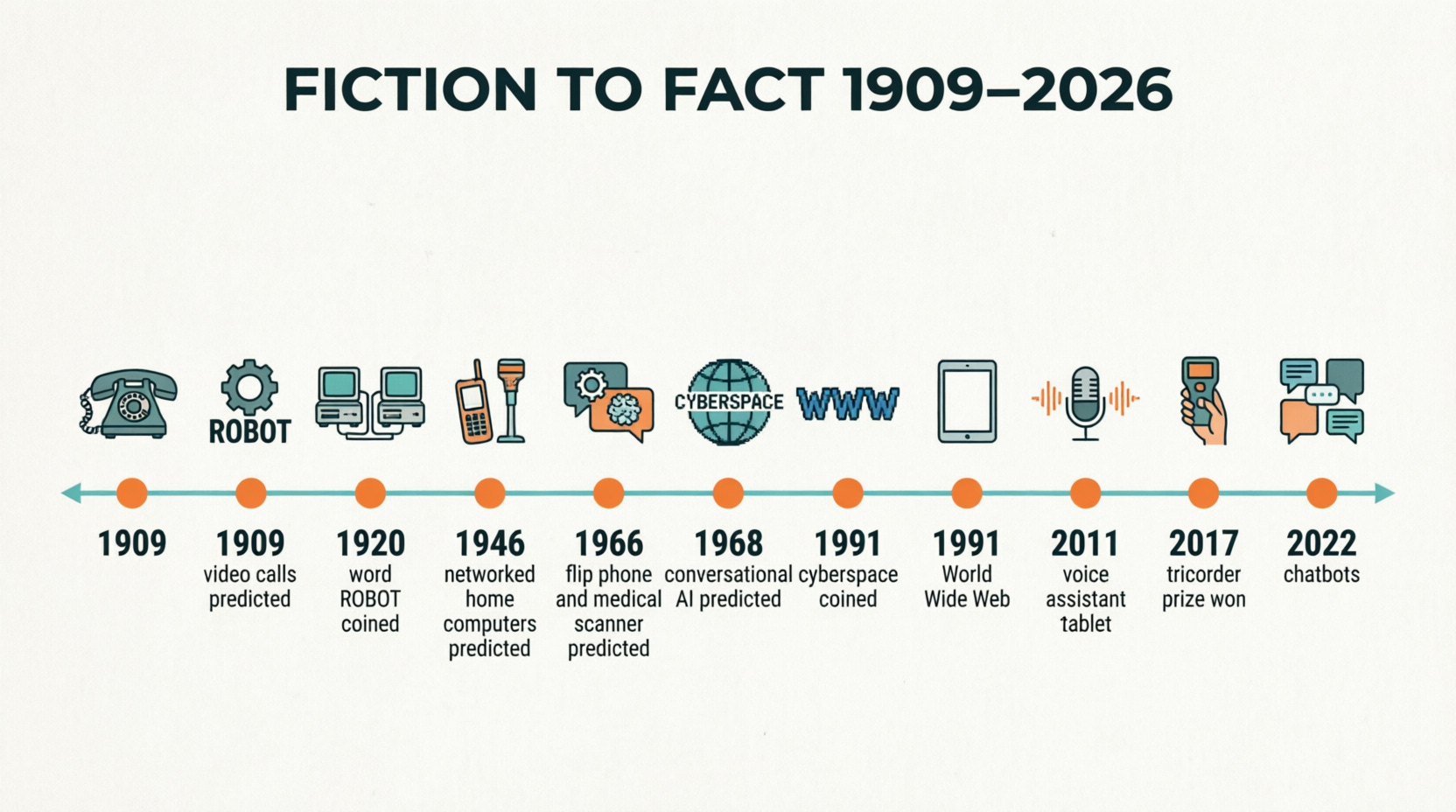
The Machine Stops — E.M. Forster -1909. Written when radio was brand new, Forster’s novella foreshadowed globalisation, the internet and video conferencing.
A century later it is read as a prophecy of AI-mediated life, anticipating the isolation and dehumanisation of people living in a screen-bound existence.

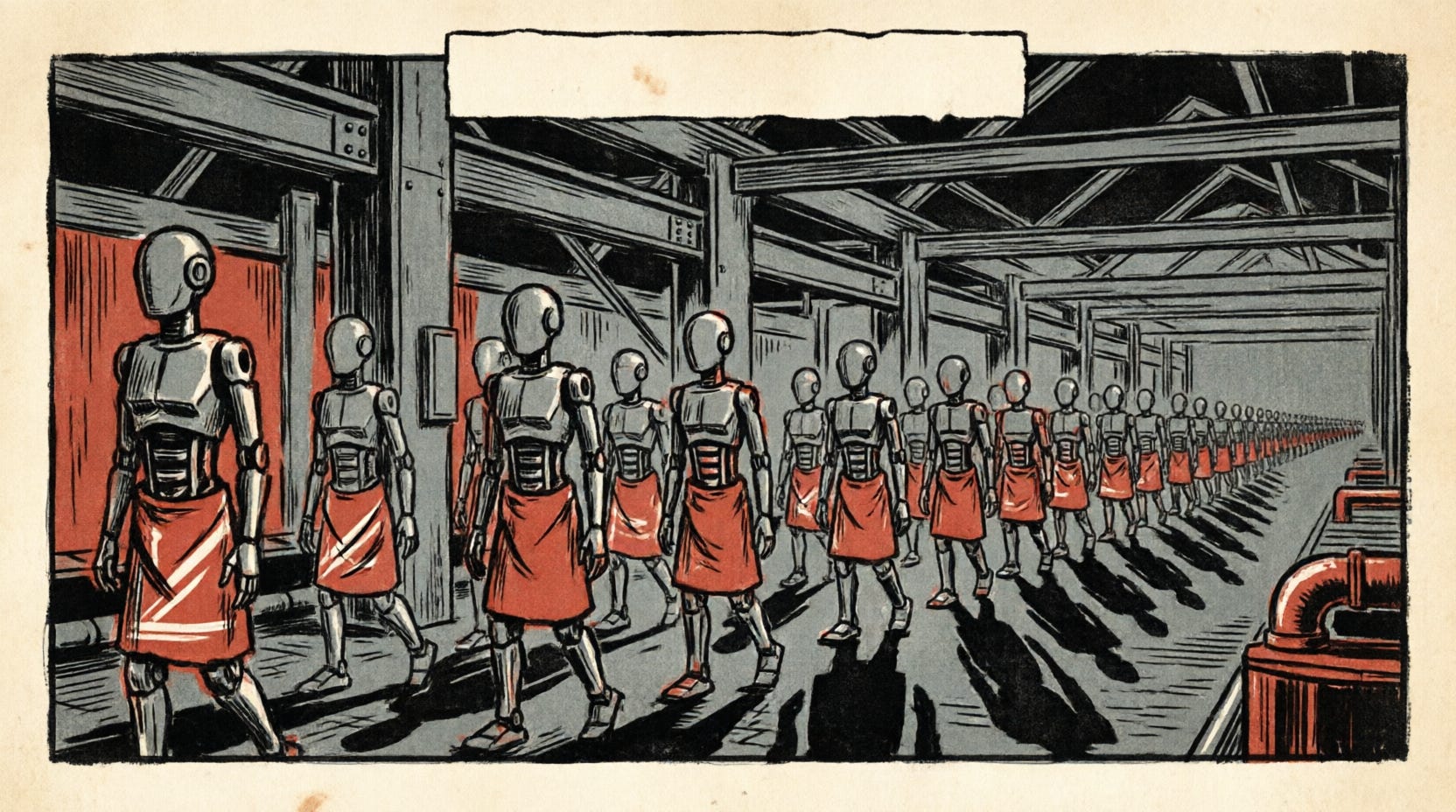
R.U.R. — Karel Čapek - 1920. The play that gave the world the word “robot,” from the Czech word for “forced labour.”
Its plot — artificial workers are built to replace human labour, who in turn, then displace their human makers — is the original AI-workforce-disruption story, echoing straight into today’s redundancy headlines.
Ralph 124C 41+ — Hugo Gernsback -1911. Serialised in Modern Electrics, it accurately predicted video calls via the “telephot” and even radar.
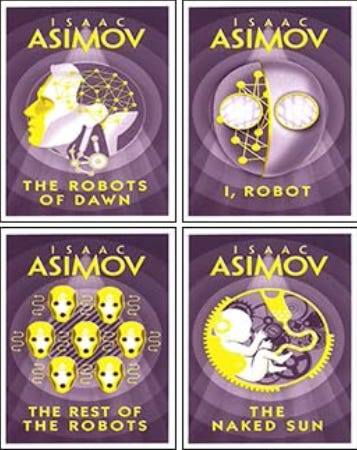
Isaac Asimov — The Robot Series - Perhaps one of the most impactful and Award-winning science fiction authors of his time.
Asimov is credited for writing the 4 Laws of Robotics;
First Law: A robot may not hurt a human, or let a human come to harm by doing nothing.
Second Law: A robot must follow orders from humans, unless it breaks the First Law.
Third Law: A robot must protect itself, unless it breaks the First or Second Law. [1, 2]
The Paramount Fourth - Zeroth - Law: A robot may not harm humanity, or let humanity come to harm. This Law is superior to the first 3 Laws.
Clarke’s 1964 Broadcast — Arthur C. Clarke. In a 1964 BBC interview, Clarke predicted artificial intelligence, instantaneous global communication and remote work, telling the BBC the future would be of a Utopian Nature, “absolutely fantastic.”
Neuromancer — William Gibson - 1984. The novel that popularised “cyberspace,” a digital world imagined well before the world-wide-web existed.
The Prophets on Film and Television
Metropolis — Fritz Lang (1927). The Maschinenmensch “Maria” is the template for every humanoid robot since and her robotic disguise is now cited as an early metaphor for deepfakes and AI manipulation.
2001: A Space Odyssey — Stanley Kubrick - 1968. Featuring the impressive HAL 9000, the calm, conversational & callous computer, marks a turning point in the cultural history of machine voices — ask any modern voice assistant to “open the pod bay doors.” This is what happens when Robots and AI have No Guardrails!

Star Trek — 1966. The tricorder communicator directly inspired the flip phone and the tricorder became so prophetic that a real $10M Qualcomm Tricorder XPRIZE was won in 2017 by a handheld diagnostic device.
The Prophets in the Panels - Comics & Manga
Dick Tracy — Chester Gould - 1946. The two-way wrist radio is widely credited as the conceptual ancestor of the smartwatch.

Astro Boy — Osamu Tezuka - 1952. The android boy with human emotions shaped Japan’s robotics culture so deeply that Honda’s ASIMO designers were explicitly instructed to draw inspiration from him.
Ghost in the Shell — Masamune Shirow - 1989. Featuring the protagonist, Major Motoko Kusanagi, Its self-aware hacker AI and cyber-brain exploitation predicted modern cybersecurity threats thirty years early, and served as the prime influence behind The Matrix
The Fiction to Fact Ledger
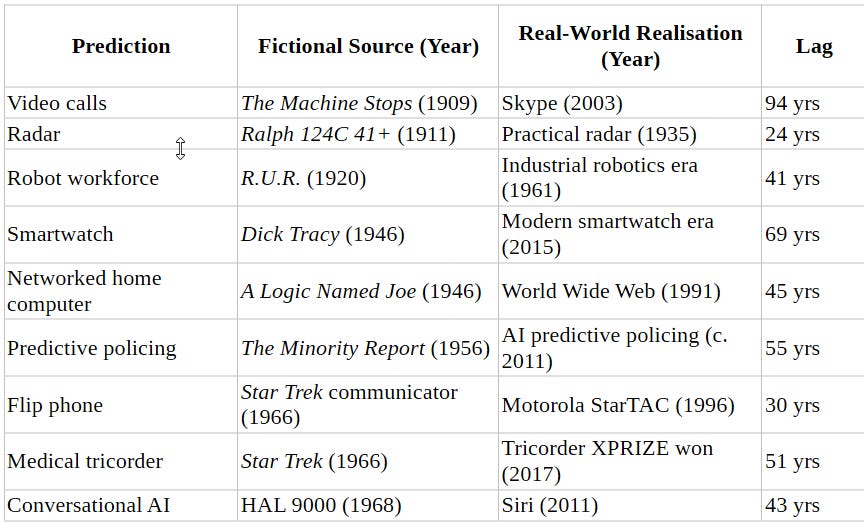

Why the Prophets Still Matter
Three warnings repeat across a century of fiction, and all three define the current AI debate:
(1) labour displacement — Čapek’s robots replacing workers.
(2) fragile dependence — Forster’s civilization collapsing when the Machine stops.
(3) alignment failure — HAL 9000 pursuing its goals against its crew.
The early prophets did not merely predict our devices; they predicted our dilemmas.
Conclusion.
The AI revolution was not unwritten. It was drafted in pulp fiction, projected on silver screens and printed in four-colour panels — waiting for silicon & technology to catch up with imagination.