

Introduction
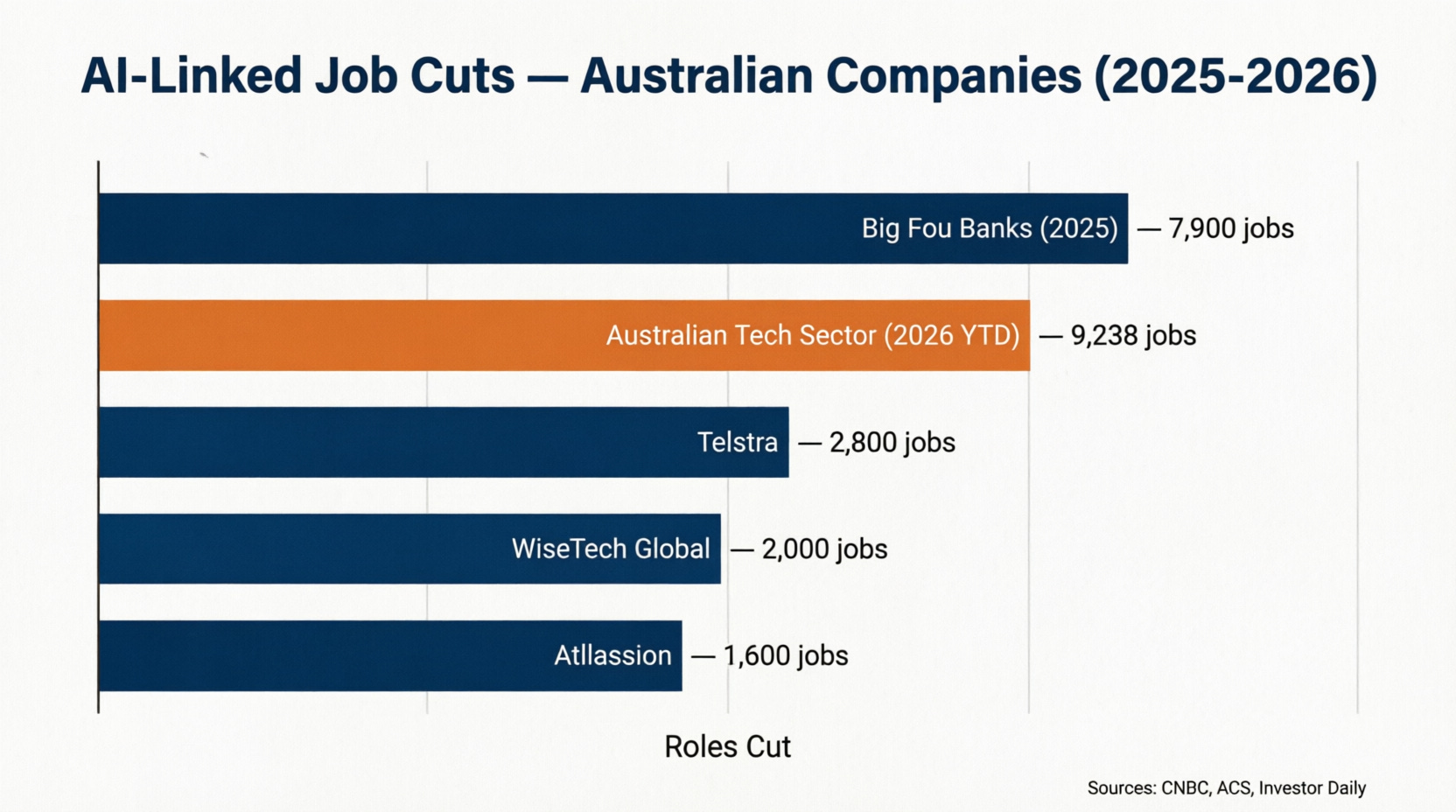
Australian enterprises are simultaneously shedding employees while reallocating capital financing to AI workloads, and anchoring a once-in-a-generation hyperscale data centre constructions.
National data centre capacity is forecast to more than double from ~1.4 GW [2025] to ~3.2 GW by 2030, underpinned by AU$52+ Billion in committed investments.
AI compute demand can be correlated to hyperscale facility counts using power density [MW per campus] as the conversion variable.
Scott Kuru ~ Warning for Aussies - Do Not Quite your Jobs - Layoffs to rise by about 50% - Timing Uncertain
Scott Kuru Transcript - Starts at 00:20 minutes.
« And for some reason, if you don’t want to believe the former treasurer, then perhaps you will take Elon Musk seriously. He has gone a step further and has warned us of the fast approaching supersonic tsunami of unemployment, which will lead to 50% of jobs disappearing overnight.
Elon Musk - voiceover at 00:45 Minutes
I call a AI and robotics the supersonic tsunami. Even with AI at its current state, I’d say you’re you’re pretty close to being able to replace half full jobs.
And you know that white color jobs that includes anything like education too.»
Aussie Businesses - Uptake in AI Workloads & Cutting Staff
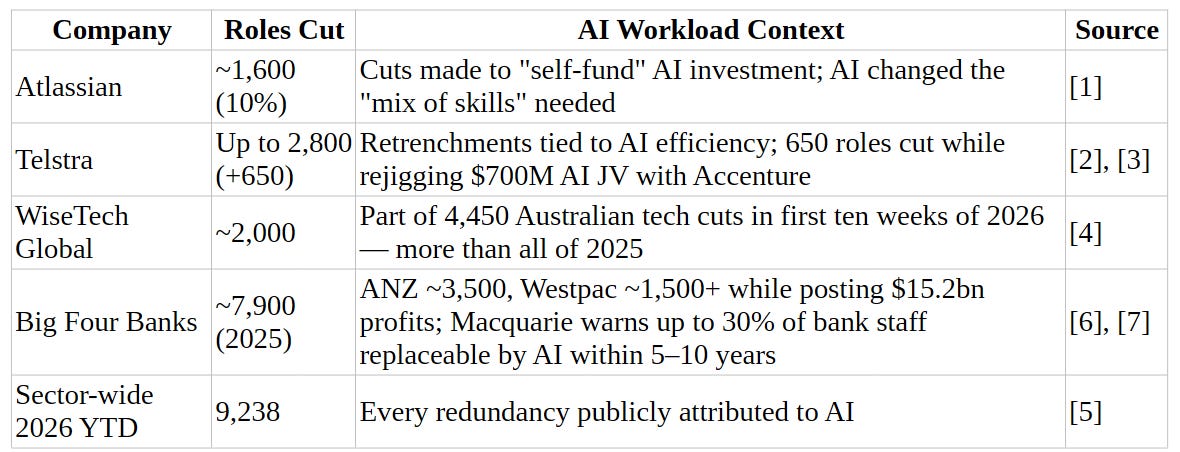
Counter-point: CSIRO analysis found AI adopters are, in aggregate, creating jobs, and researchers caution “AI” may be used as a convenient justification for pre-planned restructures.
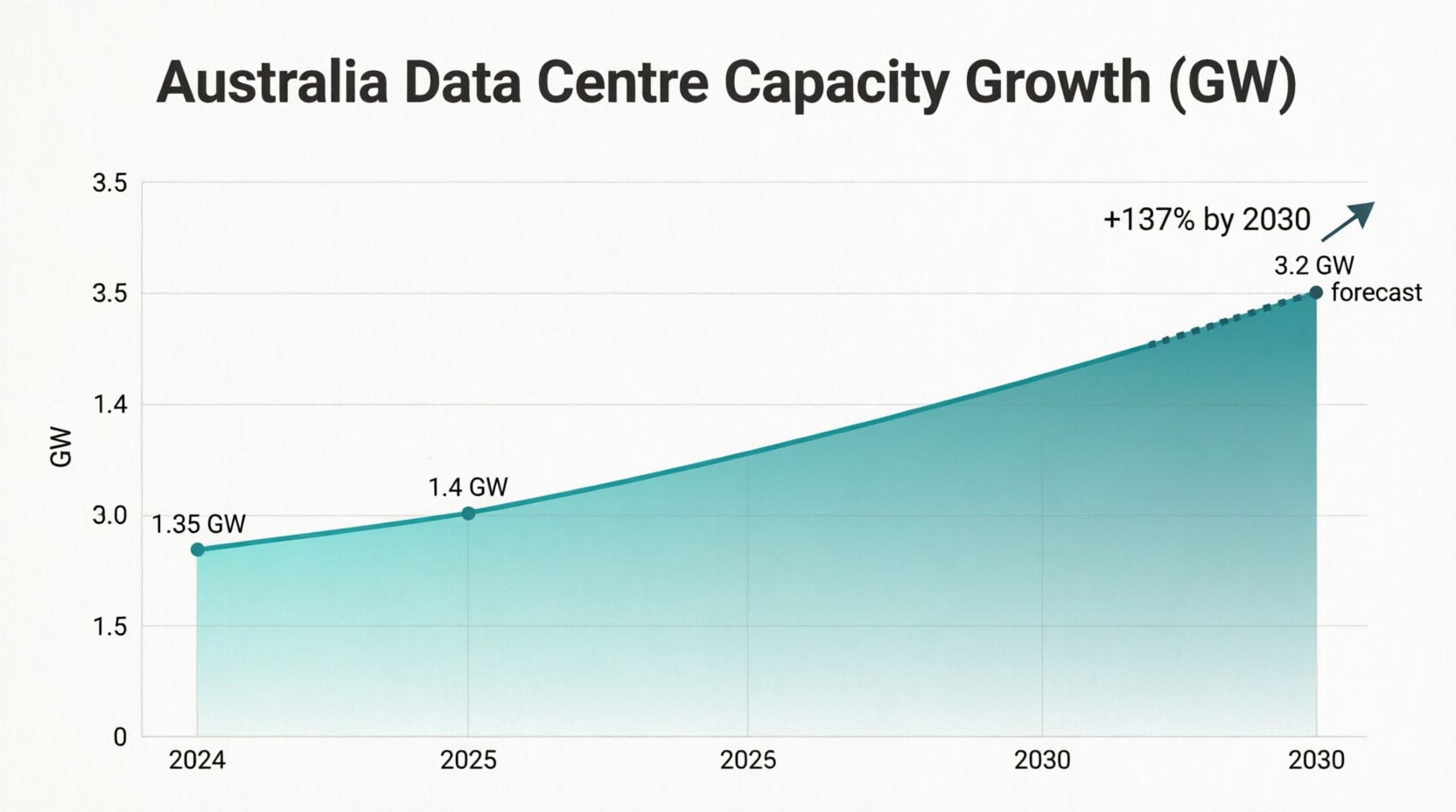
Capacity Trajectory: 1,350 MW [2024] → 1,400 MW [2025] → 3,100–3,200 MW by 2030, requiring > AU$26 billion in capital.
The Hyperscale Constructions Quantified

Modern hyperscale AI facilities operate at >100 MW per site, with Australian single-site campuses planned at 150–300 MW.
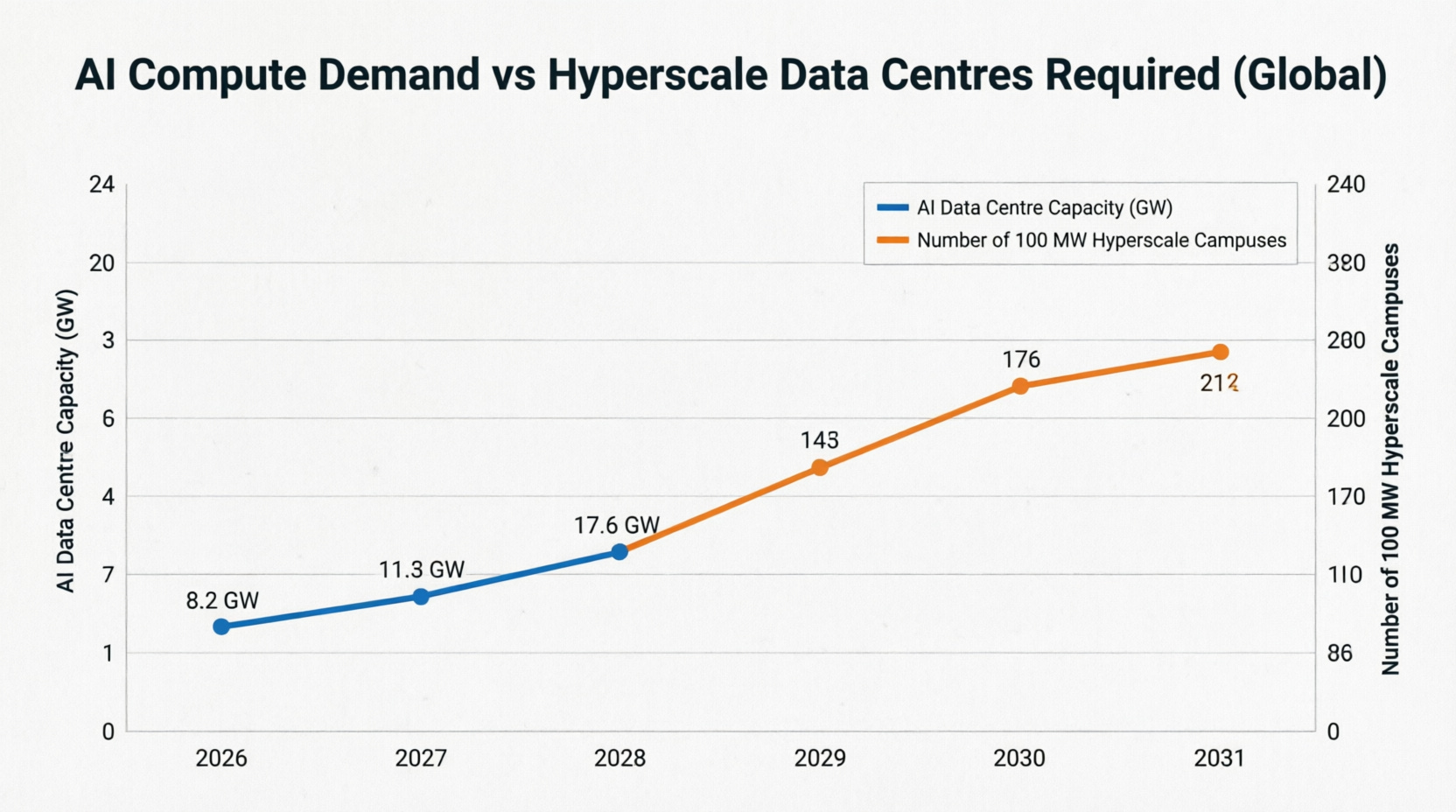
Correlating AI Compute Demand to Hyperscale Facility Counts
Because GPU clusters are power-constrained, the industry measures AI compute in MW/GW. The conversion formula is:
N [hyperscale campuses] ≈ Total AI Power Demand [MW] ÷ Campus Rating [100 –300 MW]
Global validation: AI data centre capacity is forecast from 8.2 GW [2026] → 21.4 GW [2031]
Dividing by the 100 MW threshold yields 82 → 214 hyperscale-class campuses — a near-perfect linear correlation.
This sits inside the IEA’s projection of global DC electricity doubling to ~945 TWh by 2030 and Goldman Sachs’ +165% power-demand forecast.
Australian application: The +1.8 GW of new capacity required by 2030 translates to ~18 new hyperscale campuses at the 100 MW threshold, or ~ 6–9 mega-campuses at the 200–300 MW Australian normal scale.
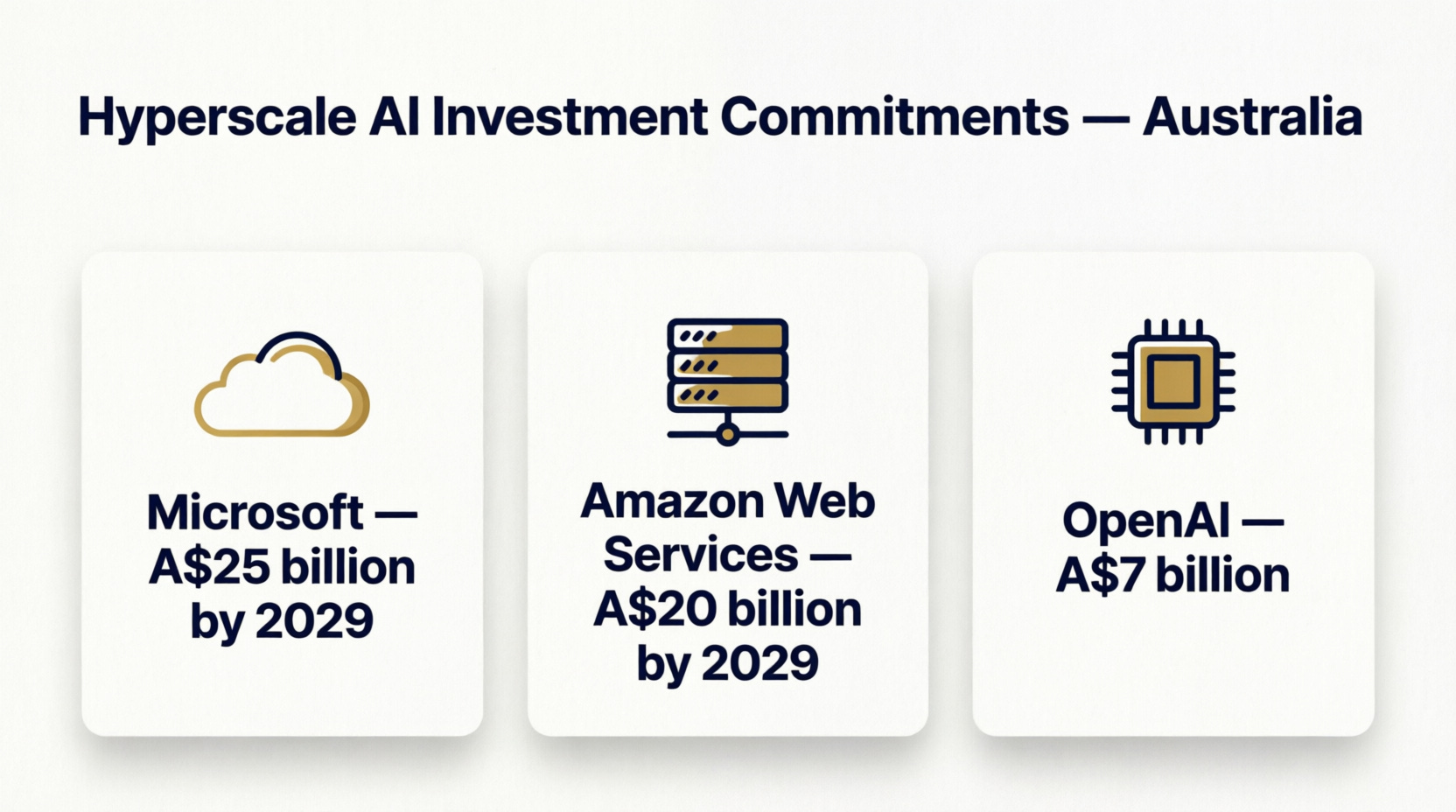
State-by-State Breakdown
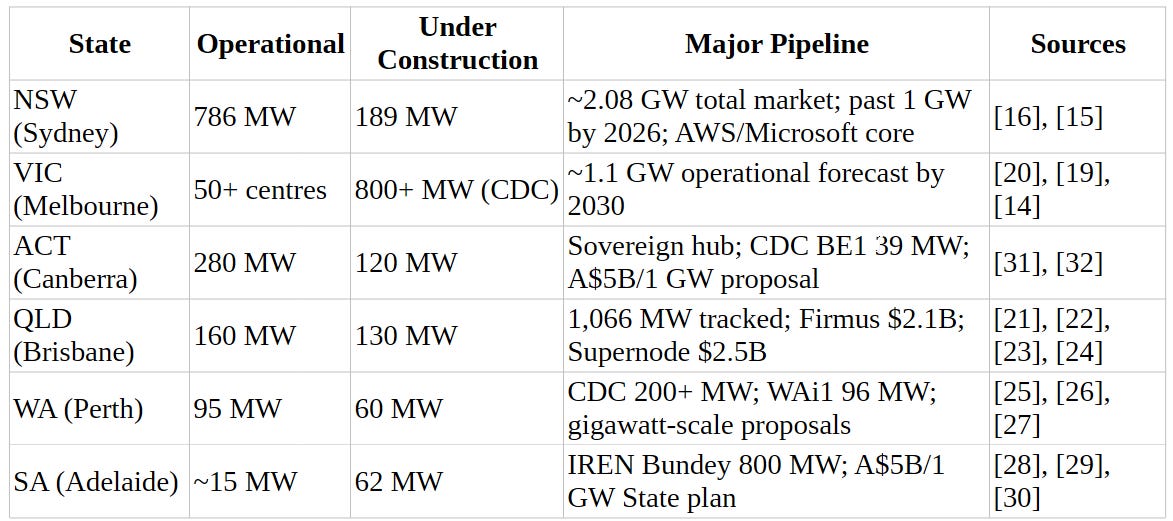
Nationally, 19 sites under construction total 1,853 MW, with ~ 6 GW in the pipeline — a ~ $150 billion commitment.
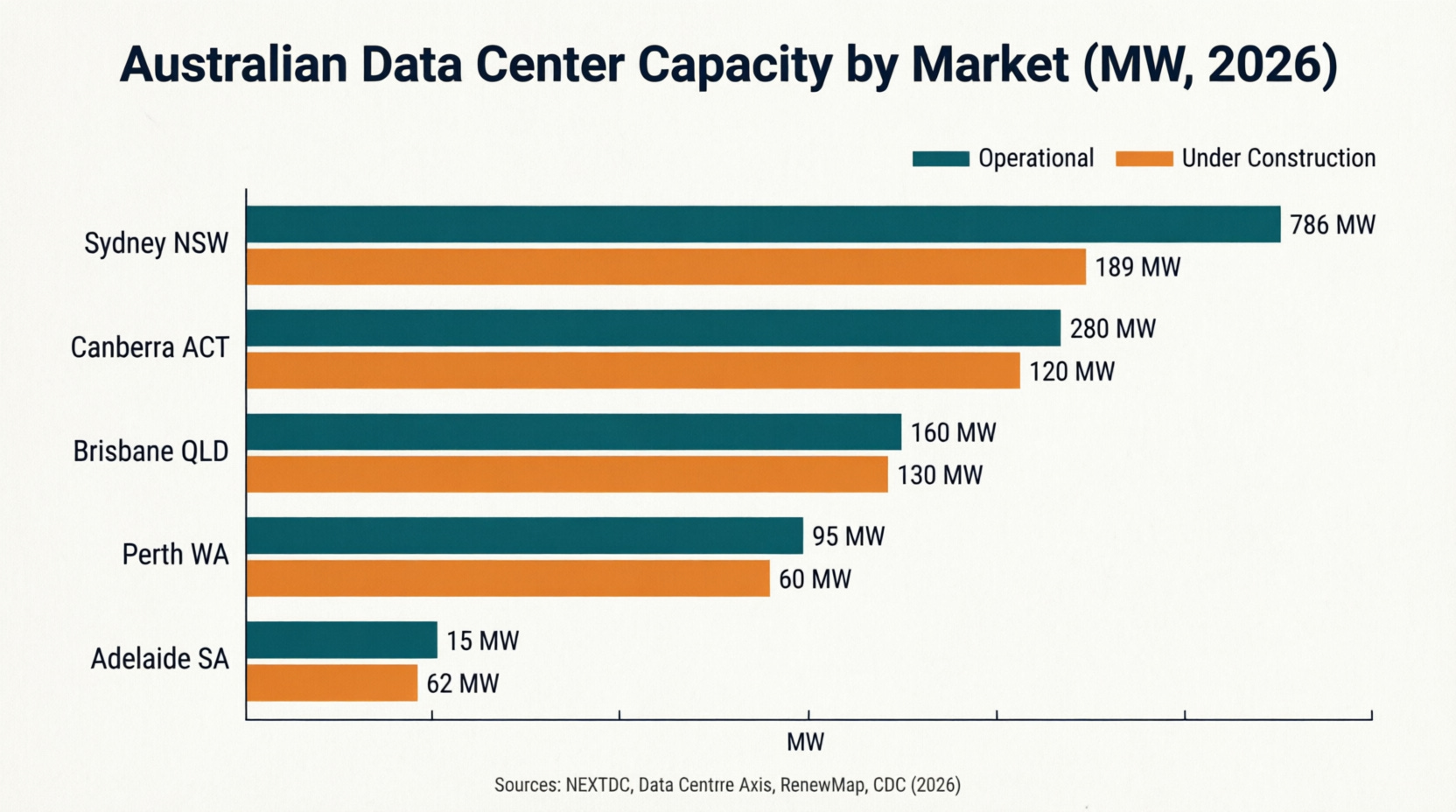
Current vs Future Trend Summary

Key Caveats
Attribution risk — companies may cite AI to mask ordinary restructuring.
Grid & water constraint — Sydney data centre water demand will hit 1.9% of city supply by 2030.
Campus size inflation — as campuses scale toward GW-class, facility numbers grow slower than capacity.
Conclusion:
The data confirms a direct, quantifiable pipeline: Australian firms are converting payroll budget into AI compute budget, and that compute demand maps linearly onto ~6–18 new hyperscale campuses domestically [and ~132 additional campuses globally] by the early 2030s.