

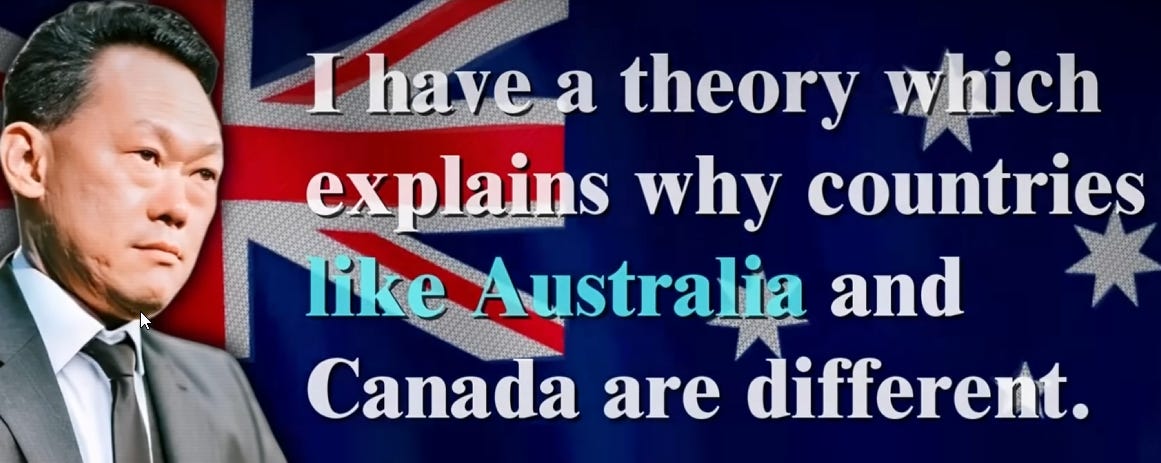
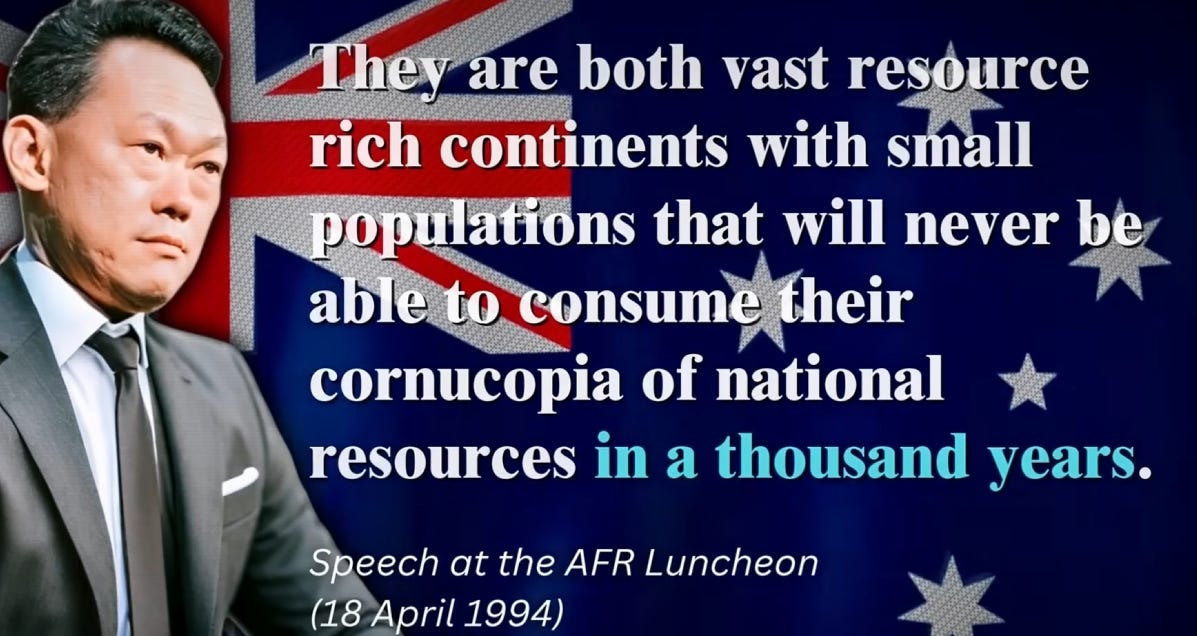
In this segment, we pick up from LKYs 17 minute video analysis — courtesy of Borderless Asia — where he predicts that Australia’s collapse is inevitable.
Video Start at 4:00 minute mark;
“This immense wealth has created a resource-rich syndrome.
The opposite of the resource-poor syndrome of East Asia.
The resource-rich syndrome results in a relaxed not an intense society.
Therefore, Australians have high consumption, low savings, low competitiveness, high current account deficits, and high debt.
Australia’s abundance, the very thing Australians celebrated, was actually a curse.”It created a culture of complacency.
Why innovate? Why compete? Why save?
Just dig another hole and the money will come. Lee warned them directly.
Unless Australia improves its lack of economic competitiveness, it will again fall prey to the resource-rich syndrome and be forever vulnerable to price fluctuations in the international commodity markets.»
Australia ~ Vulnerable to International Oil Prices
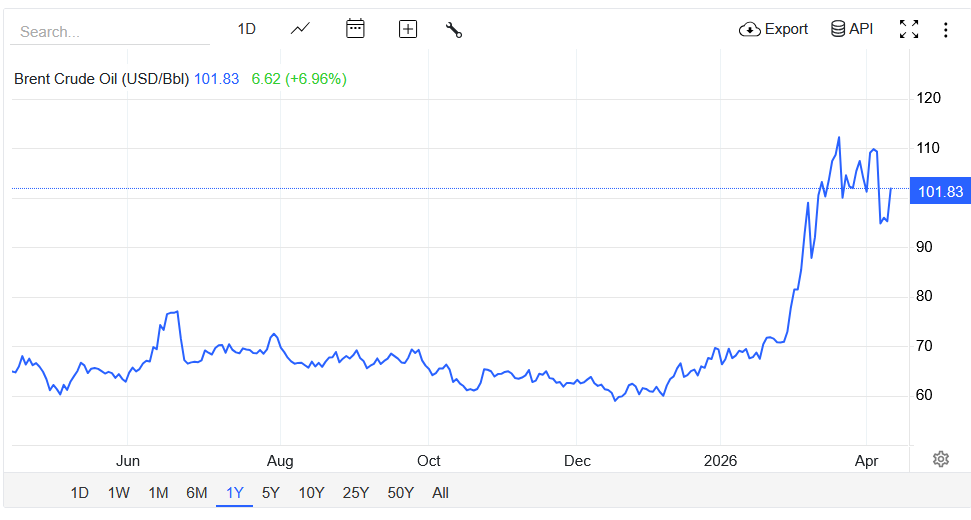
Source: brent crude oil price ~ trading economics
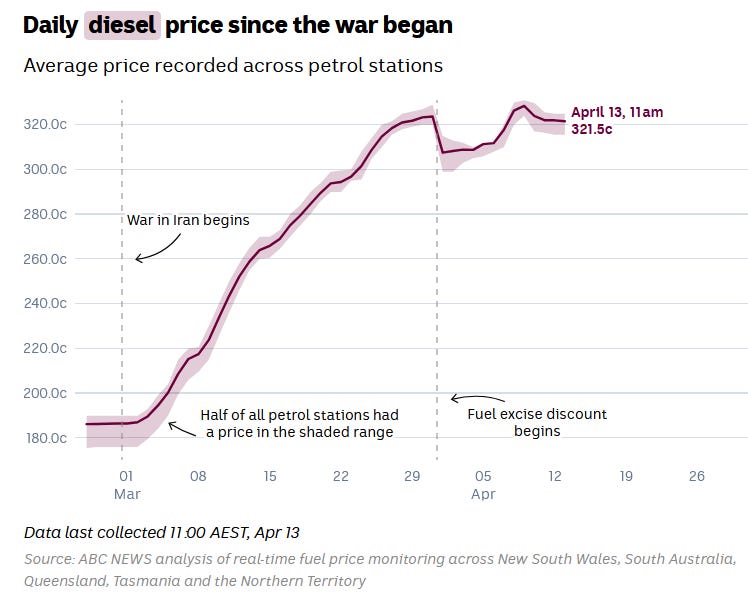
Source: abc news
PM John Howard — Welcomes the World Economic Forum to Australia ~ 2000
« To our overseas guests I extend a special welcome.
Let me characterise to you, from my perspective, the key features of the economy of the nation which is so pleased to host this World Economic Forum.You are welcomed to a country whose economy is performing better than it has for more than three decades.
An economy whose growth is probably more soundly based than at any time in the nation’s history.
An economy that was resilient and, importantly, flexible enough to ride out the Asian economic collapse.
An economy which has been greatly strengthened by successive waves of systemic economic reform.If the opportunities of globalisation are taken up they can lead to more jobs, more investment and ultimately stronger sustainable economic growth.»
Source: pmtranscripts ~ 11365
Globalisation ~ In a Nutshell

Source: both references from wikipedia
The WEF & Globalisation = * LINK *** Want to Know More? ***
Boom — China Industrialises
LKY video ~ from 7:00 minute mark;
« As China industrialised in the 2000s, Australian commodity prices didn’t just rise, they tripled. Iron ore, coal, natural gas. China needed it all.
This was the opportunity of a lifetime.An extra $1 trillion in export revenue flooded the country.
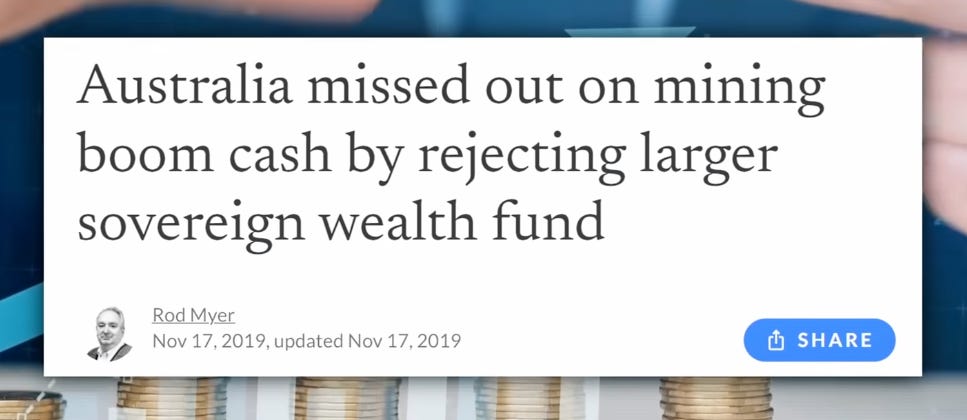
It was the chance to build a sovereign wealth fund to secure the nation forever to invest in tech, education, and infrastructure.But they blew it.
Instead of saving, the government chose short-term political gain through tax cuts and cash handouts like the baby bonus.
But crucially, by retaining tax breaks like negative gearing, much of the wealth was funneled into a non-productive housing bubble that continues to crush subsequent generations.»

LKY video ~ start at 7:40 minute mark;
« While Prime Minister Kevin Rudd finally tried to tax mining profits in 2010 to save some of that wealth for the public, he was swiftly removed from office by a mining-backed campaign.
It confirmed exactly what Lee saw in many other countries.
Corporate interests, not the people [Aus vs Norway vs Singapore (ft. Future Fund)] running the show.
Australia’s failure to convert its mining boom into lasting national wealth is highlighted by global peers.~ Norway established the government pension fund in the ‘90s, creating a financial anchor for future generations that is now valued at over $1.7 Trillion.
~ Singapore with virtually no natural resources built sovereign wealth funds in the 70s and 80s now worth an estimated $1.4 trillion through disciplined budget surpluses.Australia in comparison created the relatively small Future Fund in 2006.
Today valued at $170 billion solely to cover the retirement bills of Canberra’s bureaucrats and politicians.
Worse, this fund was primarily financed by selling off long-term income generating public assets like Telstra, trading future revenue for a one-time cash injection. »
** Norway and Singapore saved for a rainy day. Australia did not. *
A Call to Action
The current Middle East Conflict began on the 28th February, 2026 — as at the 2nd August 2026, there is still no resolution.
Australia still has NO Plan for Building State-Owned Refineries — guaranteeing Aussie Fuel Security. WHY NOT?
A Call to Action ~ Contact List
If you are unhappy & concerned about our future ~ then Speak Up!
Contact these politicians via their websites below;
The Shadow Minister for Energy is Dan Tehan, the MP from Wannon, Victoria.
The Minister for Climate Change & Energy is Chris Bowen, MP from Fairfield NSW.