

PART 1:
The Great Deception – Your Pain Is Their Policy!
While you are putting those groceries you could not afford, back to the checkout operator, or selling furniture just to keep a roof over your head, the Reserve Bank of Australia has admitted on national television that its plan is to make you hurt until you stop spending.
When asked why governments get to keep spending while households are crushed, the answer was chilling:
“It’s really not our place.”
This is not a hypothetical scenario.
This is the reality facing millions of households today, perfectly captured in a recent, explosive prime-time interview on Australia’s 60 Minutes.
It exposes a brutal double standard: central banks are deliberately crushing household spending to fight inflation, while governments continue to splurge at a rate that defies comprehension.
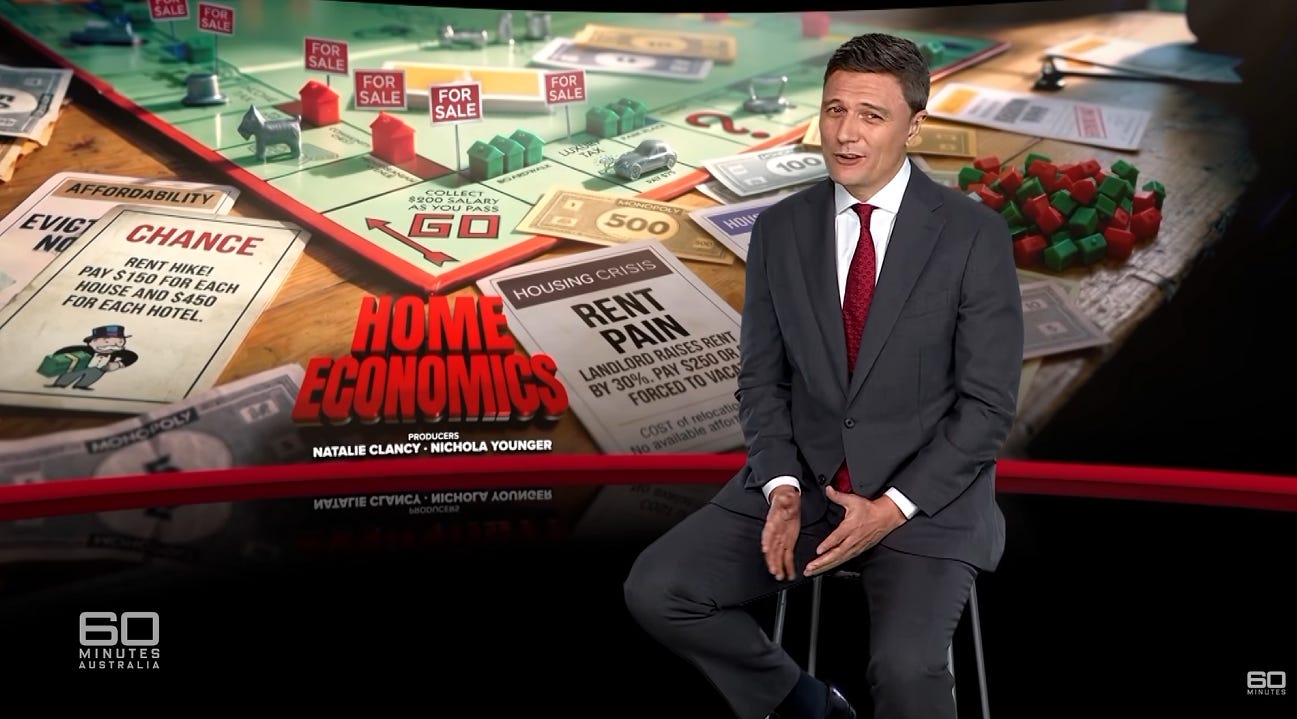
Source: 60 minutes Australia - Home Economics - 25 October 2026
The Human Cost: Vanessa’s Story
Transcript - begins at 00:48 seconds:
▓ 60 mins - “Tonight, a much needed explanation from the Reserve Bank about why we’re in such a mess. and more importantly why being so cruel now means kindness in the long term.
Like 3.3 million other Australians, Vanessa Merryweather has a mortgage it’s causing her [music] substantial worry if there is another interest rate rise.What does that mean for you?”
Vanessa: “So - [sighs and gasps] - they’re talking about two more I think November December so my house will be on the market in January if that’s the place.”
▓ 60 mins: “So, if there’s another couple of risers, you’re out. You lose your home. Yeah?
Vanessa: at 01:39 mins: “Well, so basically, I mean, like, I bring home just over $900 a week. At the moment, my mortgage wants $800.”
▓ 60 mins: So, how long has this street been home, Vanessa? [music]
Vanessa: at 02:00 mins: “Nearly 26 years. 26 years.”
▓ 60 mins: at 02:05 mins: “Back then, she borrowed conservatively to build her home on the outskirts of Sydney and managed to pay her loans so far ahead she had $60,000 sitting safely in redraw. But then life dealt a series of brutal blows. During COVID her business dried up and some terrifying health news left her unable to work full-time.”
Vanessa: at 02:32 mins: “I got bowel cancer and yeah had surgery and 25 rounds of chemo and radio. And then the year after that my eldest daughter got lymphoma.”
The Reserve Bank of Australia — RBA — operates on a simple, brutal logic: when citizens spend faster than shops and tradespeople can keep up, prices rise.
Since the RBA cannot magically produce more goods and services, it does the one thing it can: it raises interest rates.
Commercial banks pass these higher rates straight onto mortgages and loans. Repayments surge, household budgets shrink, and demand falls, theoretically easing inflation.
But there is a massive catch. Governments are some of the biggest spenders in the economy, and interest rate hikes barely slow them down.

▓ 60 mins: at 06:48 mins: “RBA’s strategy relies on Australians cutting back, but the latest figures show they already have. Household spending has stalled. So why is inflation still raging? One reason is that while mortgage holders starve the fire, the government keeps throwing fuel on it.”
▓ 60 mins: at 07:00 mins: “What is the benefit from continuing to slug everyday households and Australians when seemingly state and federal governments can splurge however they see fit?”
Sarah Hunter - RBA Chief Economist:
“Yeah, look, government spending is definitely part of the picture.
But what I would also say is that we’re an independent central bank.
Uh we’re unelected.
It’s really not our place to tell the country, politicians, individuals, anyone what governments should or shouldn’t spend money on.
Um how much they should or shouldn’t be spending.
That’s a conversation the country should have. Um, and we all get to uh have our say at the ballot box effectively uh when elections roll around.”
▓ Read that once more:
”But what I would also say is that we’re an independent central bank.
Uh, we’re unelected.
It’s really not our place to tell the country, politicians, individuals, anyone what governments should or shouldn’t spend money on.
Um, how much they should or shouldn’t be spending.”
Credit to the interviewer for pushing back, but the damage was done. The admission was clear: the central bank knows government spending fuels inflation, but it refuses to stop it.
Instead, it chooses to squeeze the only part of the economy it can control: you.
Money From Nothing?
Ask most people where money comes from and you will hear one of two answers:
The government prints it, or,
Banks lend out what savers put in.
In 2014 the Bank of England, the UK’s central bank, published a plain-language article that said neither is quite right. When a commercial bank makes a loan, it creates new money in the borrower’s account.1
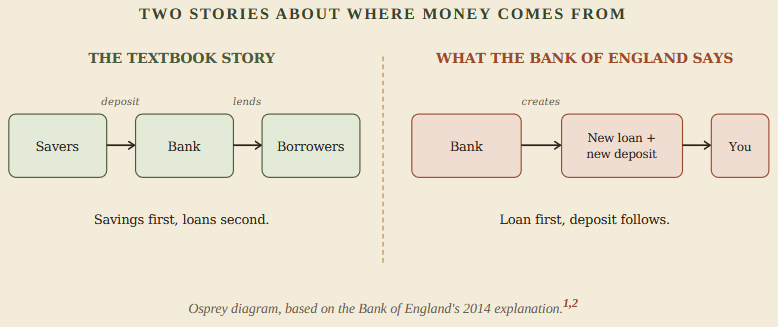
The Moment a Loan Becomes Money
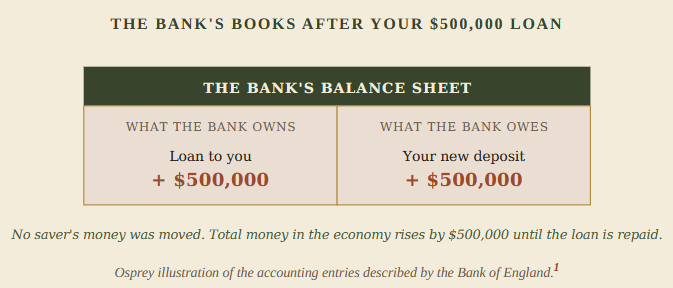
Take a simple example. You borrow $500,000 to buy a home.
The bank does not hand you a bag of other people’s savings.
It types $500,000 into your account.
At that instant the bank’s books show two new entries;
Your promise to repay (an asset to the bank), and,
The deposit it now owes you (a liability).
New money exists where none existed a moment before.1
That single fact is the doorway to this whole series. If most money is created by banks lending, then the questions that matter are;
Who controls that lending,
Who decides where it goes, and,
Who answers for the results.
The Numbers Don’t Lie
Let’s look at the data, because the scale of this imbalance is staggering:
Last financial year, the federal government took in about 24.1% of GDP in taxes— near an all-time record.
Yet, federal spending hit 26.9% of GDP, the highest level since the mid-1980s “banana republic” crisis warnings of Treasurer Paul Keating.
Zoom out to all levels of government (federal, state, and local), and they brought in $1.073 trillion in revenue but spent $1.111 trillion, leaving a $37.8 billion shortfall.
Their spending grew by 8.2%, while their income grew by just 6.6%.
Source: Scott Kuru - a $Trillion wasn’t enough for Australia
When gaps like this occur, they get borrowed. The Parliamentary Budget Office expects interest payments alone to eat up 6.2% of all government revenue by 2029–30. That is money that will never reach a hospital, a school, or a road.
It goes straight to servicing the debt.
The Lie Vs. The Truth
To understand how we got here, we must separate the myth from the reality of modern central banking.
The Lie: Central banks are independent, neutral technocrats whose only goal is to protect the value of your money by fighting inflation.
The Truth: The current system is structurally designed to protect government spending power. By forcing households to bear the entire burden of economic adjustment through higher mortgage rates and stagnant wages, central banks allow governments to treat the national treasury like a limitless credit card.
As the International Monetary Fund (IMF) has explicitly warned Australian governments: lower government spending would reduce demand and bring inflation down.

Yet, the policy response remains unchanged. A dollar of government spending pushes up prices just as hard as a dollar of yours, but the rate hikes are built to squeeze your budget, not theirs.
Will Australians Drown in Debt — Is There No Lifeline?
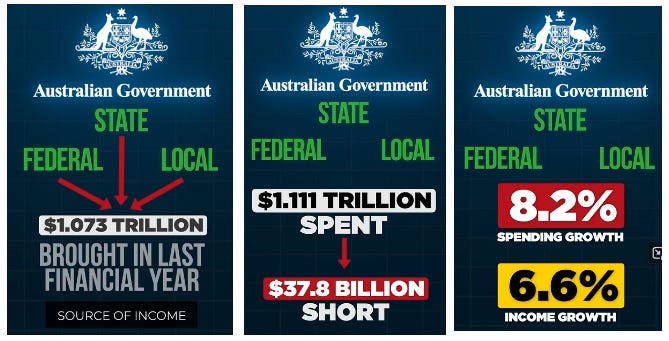
Source: Scott Kuru - a $Trillion wasn’t enough for Australia
As Scott Kuru reported from Australian Govt Data, we have a $37.8 Billion shortfall.
Where could we possibly find a solution to turn around Budget Deficits like this?
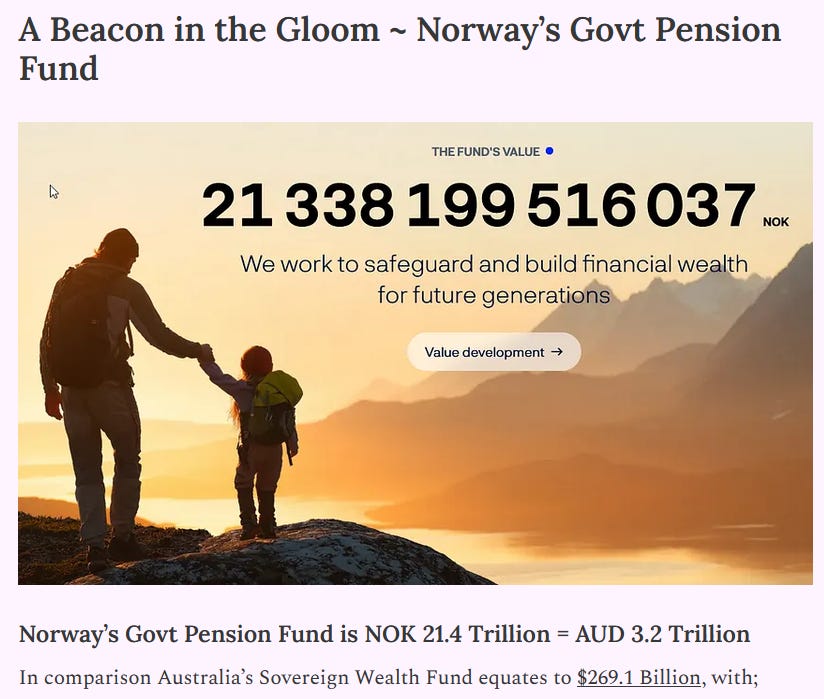

▓ Source: Osprey Investigation about Plundered Nations & MNCs. ▓
This completes PART 1 of our 8 PART Series.
Over the next Seven Parts, Osprey looks at how central banks and the banks beneath them really operate, drawing on;
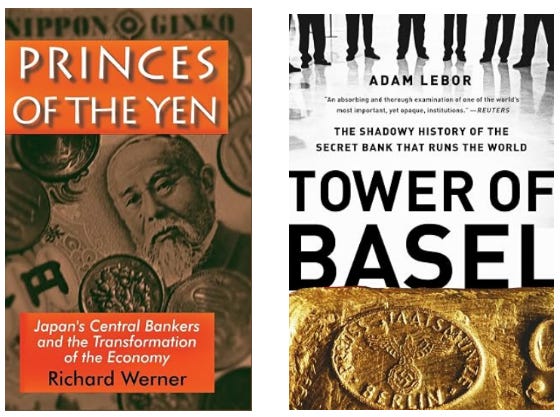
Economics Professor Richard Werner’s study of the Bank of Japan,
OSINT & investigative foreign correspondent, Adam LeBor’s history of the Bank for International Settlements.
▓ In PART 2, we Deep-Dive into the murky world of Central Banks and the Secret Central Bank that Runs the World. Here is an Appetiser.. ▓

Sources: Part 1
Money creation in the modern economy (McLeay, Radia, Thomas). Bank of England Quarterly Bulletin, 2014 Q1 www.bankofengland.co.uk
Money in the modern economy: an introduction. Bank of England Quarterly Bulletin, 2014 Q1 www.bankofengland.co.uk
Can banks individually create money out of nothing? The theories and the empirical evidence (R. A. Werner). International Review of Financial Analysis 36, pp. 1-19, 2014 doi.org
Banks do not create money out of thin air. CEPR VoxEU column. cepr.org
Princes of the Yen: Japan’s Central Bankers and the Transformation of the Economy (R. A. Werner). Book record. M.E. Sharpe, 2003 en.wikipedia.org
Tower of Basel: The Shadowy History of the Secret Bank That Runs the World (A. LeBor). PublicAffairs / Hachette Book Group, 2013 www.hachettebookgroup.com