Synopsis
As reported by Nicolas Hulscher MPH ~~ Masters in Public Health ~ Epidemiology
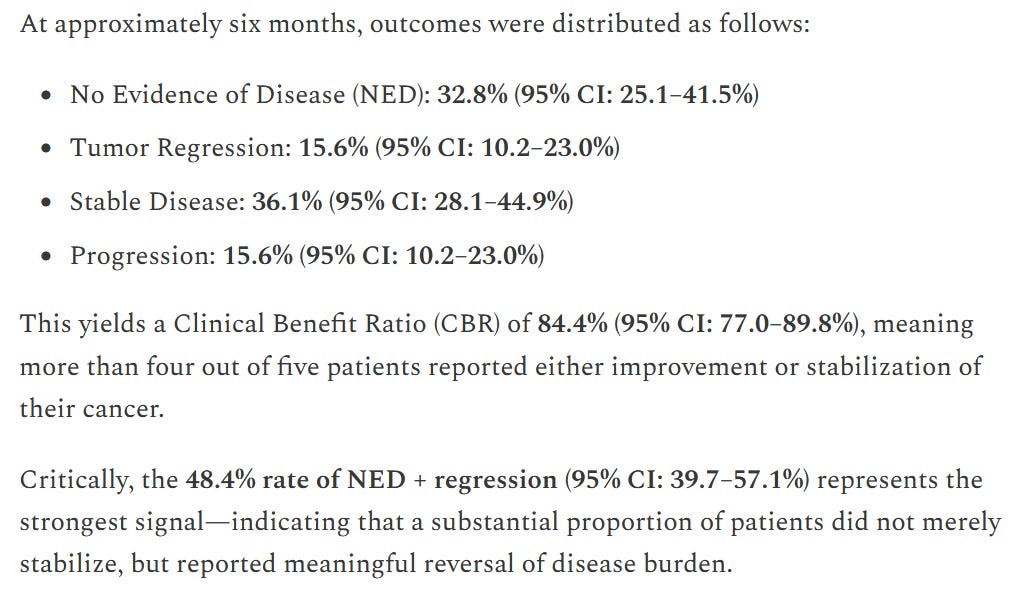
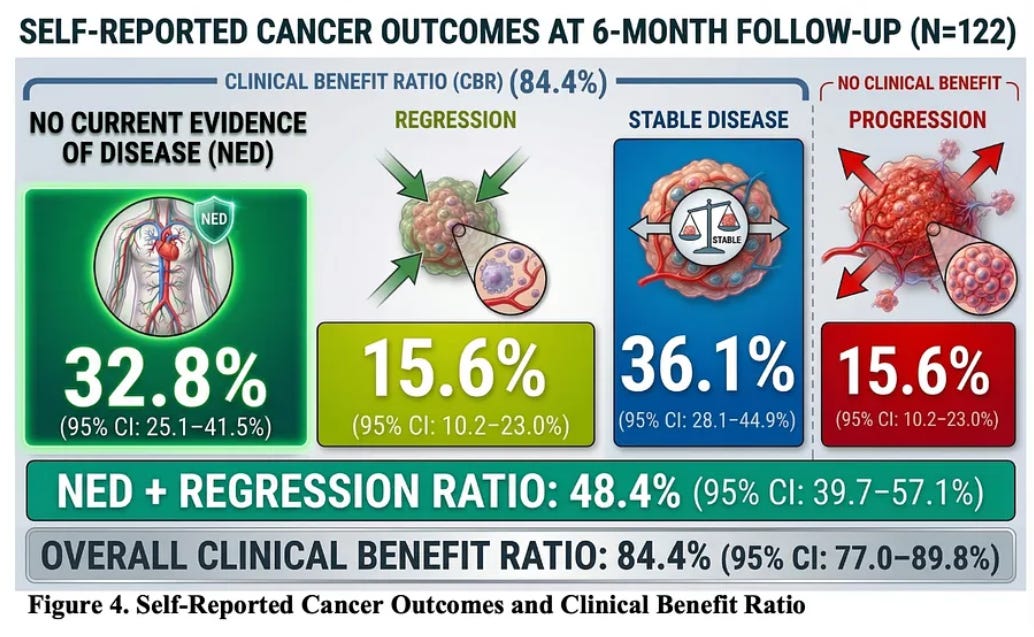
After just 6 months, 48.4% of cancer patients taking ivermectin and mebendazole reported no evidence of disease [32.8%] or tumor regression [15.6%], while 36.1% reported disease stabilization.
Finally there is some good news for Cancer Patients, thanks to;
1. Nicolas Hulscher, MPH (author);
2. Kelly Victory, MD;
3. James A. Thorp, MD;
4. Drew Pinsky, MD;
5. Alejandro Diaz-Villalobos, MD;
6. Peter Gillooly, MSc;
7. Foster Coulson;
8. Melissa Annazone;
9. Chloe Radesi;
10. Jessica Brooks;
11. Peter A. McCullough, MD, MPH; and,
12. Harvey Risch, MD, PhD [Chairman of the President’s Cancer Panel].
Project Design ~ Highlights
« We analyzed a prospective observational cohort of 197 cancer patients, with 122 completing structured follow-up at approximately six months (61.9% response rate). Patients were prescribed a compounded ivermectin–mebendazole protocol by licensed U.S. providers, and outcomes were collected through standardized digital surveys assessing cancer status, adherence, and safety.
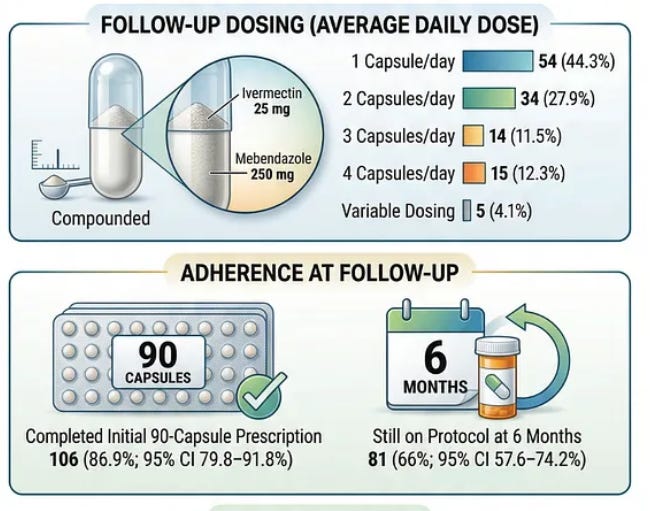
Each capsule contained 25 mg ivermectin and 250 mg mebendazole, with dosing individualized by clinicians—most commonly 1–2 capsules per day, though a subset of patients used higher daily dosing or cyclic regimens depending on disease status and tolerance.
Importantly, this was a prospective, structured clinical program evaluation, capturing longitudinal patient-reported outcomes rather than retrospective recall alone—strengthening the internal consistency of the findings.»
Real-World Data & Prospective Framework
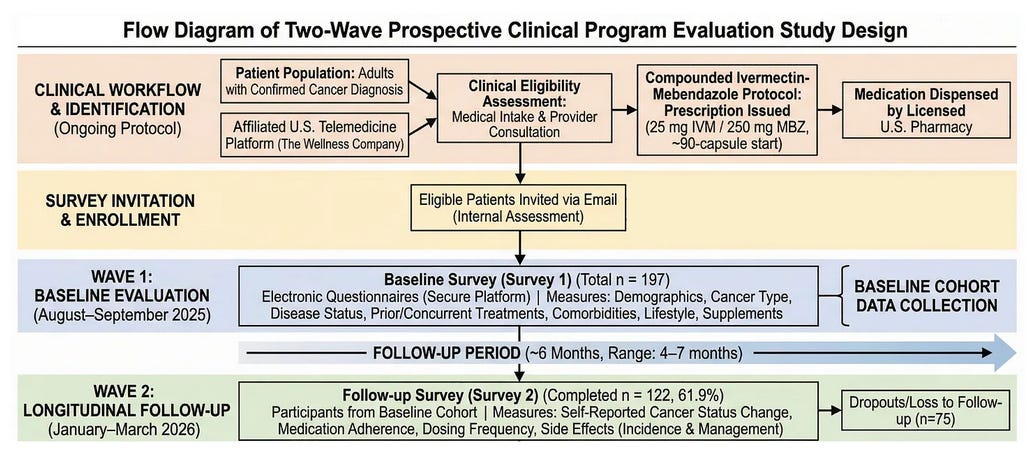
Source: the focal points ~ ivermectin + mebendazole in cancer treatments

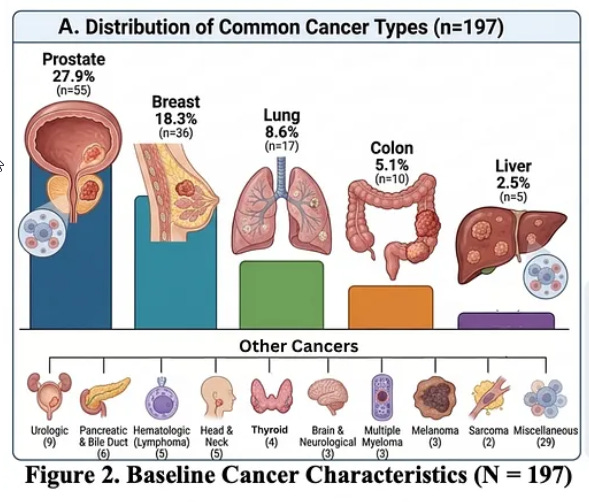
This was not a population limited to early-stage or low-risk disease.
At baseline:
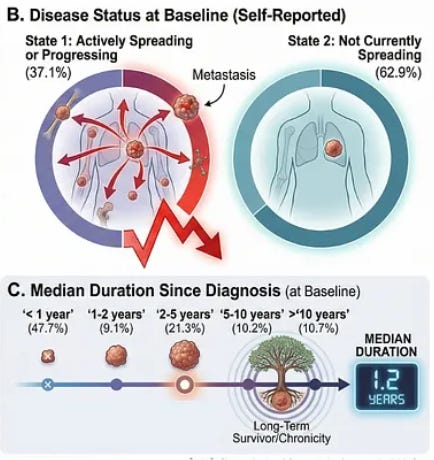
1. 37.1% of patients reported actively progressing cancer.
2. Nearly half were within one year of diagnosis, while others had long-standing disease.
3. Many had already undergone standard therapies;
~ Chemotherapy (31.5%)
~ Radiation (28.9%)
~ Surgery (42.1%)
This reflects a real-world oncology population, including patients with treatment exposure, ongoing progression, and complex clinical histories.
Source: the focal points ~ ivermectin + mebendazole in cancer treatments
Primary Outcomes
Conclusion